
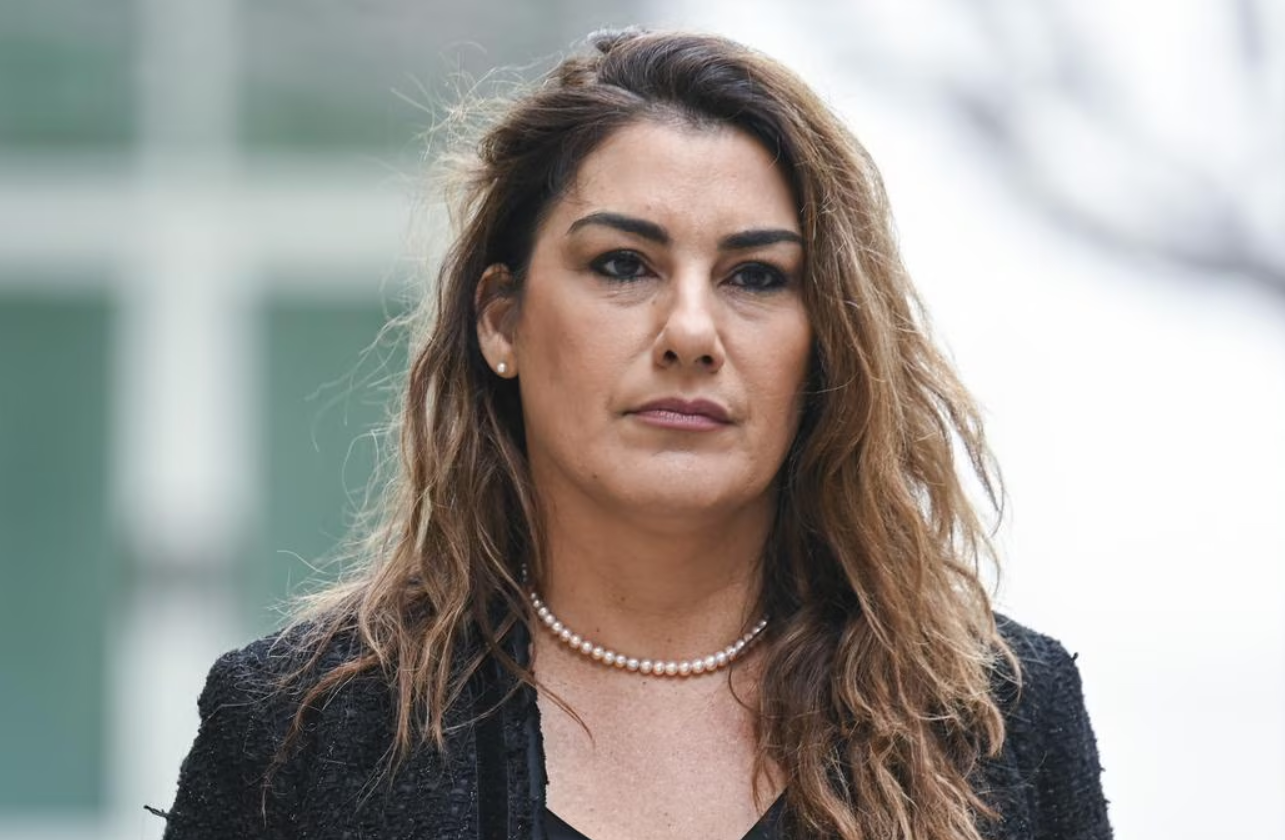
Lidia Thorpe has become one of the most distinctive and controversial voices in contemporary Australian politics. Born in Carlton, Victoria, in 1973, she built a career combining Indigenous activism with parliamentary politics and has repeatedly challenged established political conventions. Her trajectory has included membership of the Australian Greens, leadership responsibilities within the party and, since February 2023, service as an independent senator.
Thorpe’s political identity is closely connected to First Nations sovereignty, justice and the relationship between Indigenous peoples and the Australian state. Her willingness to use direct and sometimes confrontational political language has made her a particularly visible senator, while also producing substantial criticism and controversy.
Activism Before Federal Politics
Thorpe’s political story cannot be separated from her Indigenous heritage and activism. Long before becoming a federal senator, she was involved in community advocacy and issues affecting Aboriginal Australians.
Her political approach frequently emphasizes sovereignty rather than viewing Indigenous policy solely through the framework of government programs. This distinction is essential for understanding many of her positions. Thorpe has argued that First Nations people possess sovereignty that was never ceded, a principle that shapes her approach to questions involving treaties, constitutional recognition and the Australian political system.
She received a Fellowship for Indigenous Leadership in 2008, reflecting her involvement in community leadership years before her arrival in federal Parliament.
Breaking Ground in Victorian Politics
Before entering the Senate, Thorpe served in the Parliament of Victoria. Her election carried historical significance because she became the first Aboriginal woman elected to the Victorian Parliament.
This achievement gave her a platform from which to address Indigenous justice, environmental questions and social policy. It also demonstrated that activism could be translated into electoral politics, although the compromises required by parliamentary institutions would later become a recurring tension in her career.
Her move from state politics to the federal level dramatically increased the national visibility of her positions.
Entering the Australian Senate
Thorpe entered the Senate representing Victoria and became a member of the Australian Greens parliamentary team. Within the Greens, she held spokesperson responsibilities covering First Nations issues, justice, sport and the republic. She also served for a period as Deputy Leader of the Australian Greens in the Senate.
These positions placed her at the centre of national discussions about Indigenous policy. However, they also exposed disagreements between Thorpe’s approach and the broader strategy of the Greens.
The most consequential disagreement emerged around Australia’s proposed Indigenous Voice to Parliament.
Leaving the Greens
In February 2023, Thorpe left the Australian Greens and became an independent senator. Parliament’s official record lists her as an independent from 6 February 2023 onward.
Her departure was closely connected to differences surrounding the Voice referendum and Indigenous sovereignty. Thorpe argued for a political approach placing treaty and sovereignty at the centre of the discussion.
The decision provided her with considerably greater independence. Without belonging to a parliamentary party, she could take positions without being bound by a collective party strategy. At the same time, independence removes much of the organizational support and coordinated political infrastructure available to party representatives.
Thorpe appeared willing to accept that trade-off in exchange for greater freedom to pursue her political priorities.
The Voice Referendum and a Different Indigenous Perspective
The 2023 referendum proposing an Aboriginal and Torres Strait Islander Voice to Parliament produced one of Australia’s most important debates about Indigenous recognition in decades.
Thorpe’s position demonstrated that Indigenous Australians themselves did not hold a single view on the proposal. While many prominent Indigenous leaders strongly supported the Voice, Thorpe criticized the process from a sovereignty-focused perspective.
Her intervention complicated simplistic descriptions of the referendum as a straightforward division between Indigenous supporters and non-Indigenous opponents. The debate contained fundamentally different ideas about recognition, treaty, sovereignty and the appropriate relationship between First Nations peoples and Australian institutions.
A Political Style Built Around Protest
Thorpe frequently uses methods more closely associated with activism than conventional parliamentary communication. Demonstrations, direct confrontation and symbolic actions have remained central to her public identity even after entering one of Australia’s most formal political institutions.
This style generates sharply different reactions. Supporters regard her willingness to disrupt established conventions as necessary for drawing attention to issues that traditional politics has failed to resolve. Critics argue that confrontational tactics can distract from substantive policy or make political cooperation more difficult.
Both interpretations help explain why Thorpe attracts attention far beyond what might normally be expected for an independent senator.
Controversies and Scrutiny
Thorpe’s career has also involved controversies unrelated to policy disagreements. Her conduct and personal associations have periodically attracted significant media scrutiny, and opponents have questioned her judgment.
For a politician whose public identity emphasizes accountability and structural injustice, such scrutiny can become especially intense. Thorpe has responded to various controversies while continuing to argue that the broader political focus should remain on Indigenous sovereignty and injustice.
The combination of activism, controversy and parliamentary responsibility makes her difficult to categorize within conventional Australian political labels.
Independence as a Political Identity
Since leaving the Greens, Thorpe has increasingly operated as a political figure whose influence comes from visibility and advocacy rather than control over a large parliamentary bloc.
The Australian Senate’s structure gives individual senators opportunities to influence debate, particularly when government legislation requires additional votes. But Thorpe’s broader significance lies in her ability to place particular concepts—especially sovereignty and treaty—into national discussion.
Whether that approach produces the policy outcomes she seeks is a separate question. Political influence can involve changing legislation, but it can also involve changing the terms through which an issue is debated.
A Politician Who Rejects Conventional Boundaries
Lidia Thorpe’s career illustrates the difficult relationship between activism and institutional politics. Activists often seek fundamental change, whereas parliamentary systems generally operate through negotiation, incremental legislation and compromise.
Thorpe has repeatedly resisted allowing the second environment to completely transform the first. That decision has helped make her one of Australia’s most recognizable Indigenous politicians, but it has also ensured that controversy remains closely associated with her public career.
Her political future may be difficult to predict, but her significance is already clear. She represents a strand of First Nations politics that rejects the assumption that greater inclusion within existing institutions is necessarily sufficient. Instead, she continues to raise the more fundamental question of what relationship should exist between those institutions and Indigenous sovereignty.
